
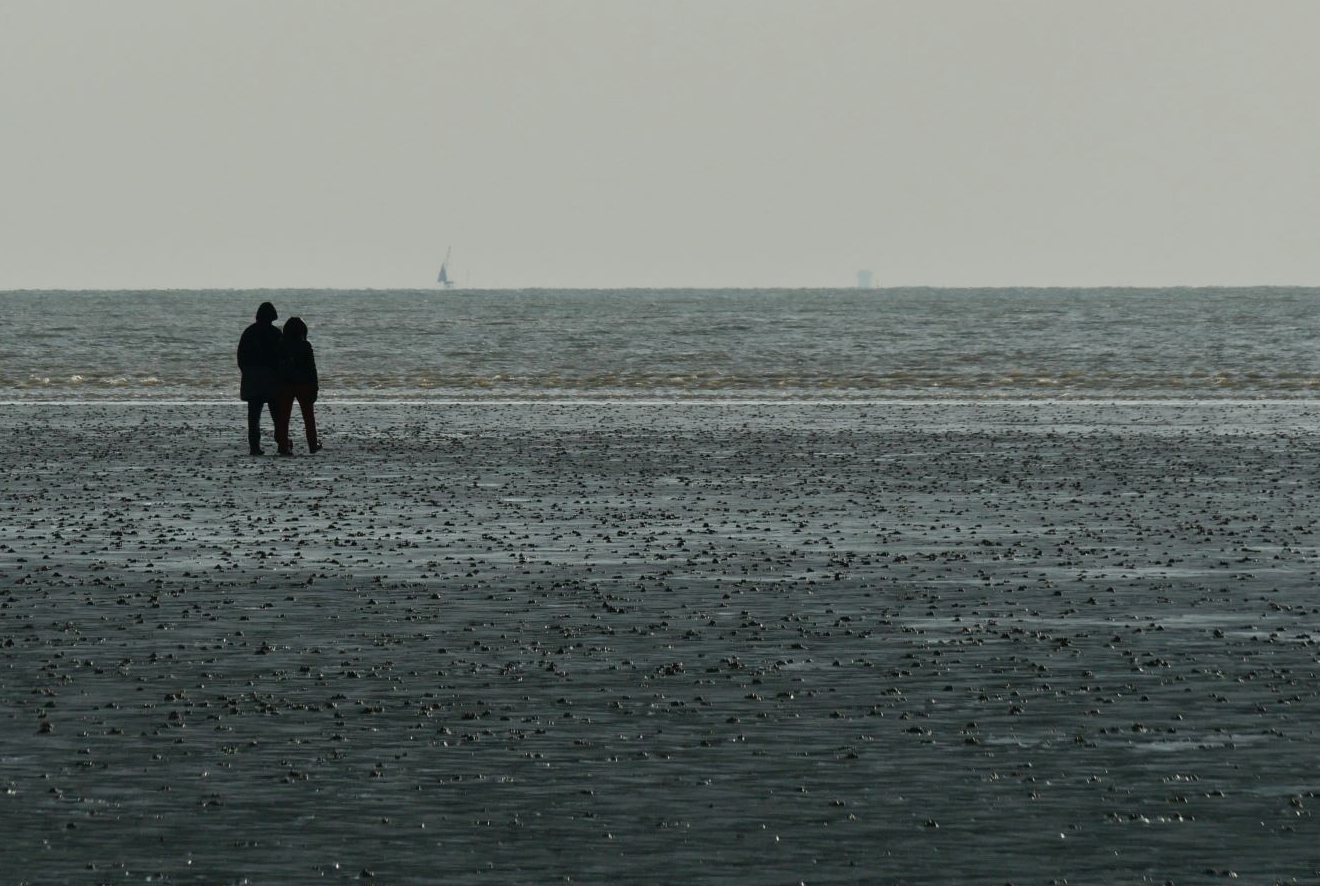
This essay is not a view from nowhere. I’ve spent decades working with governance systems as a sustainability consultant, a strategic adviser, a sectoral representative and now as a researcher. I am a long-term participant in the processes I’m now trying to understand. That position is part of the argument: because what I want to suggest is that the limits I’m describing here are not visible from a distance. They show up as lived tension, in practice, at the boundary
What is the problem in climate governance?
Across climate governance, there is a persistent assumption: that with enough data, better models, more aligned incentives, and stronger implementation, the issue can be sufficiently understood and managed.
This assumption shapes how issues are defined, how evidence is treated, and what kinds of responses are considered legitimate. It underpins calls for more data, better communication, stronger policy, and greater urgency.
And yet, despite sustained effort, a patterned sense of not grasping the issue persists.
When risk doesn’t register
Certain risks trigger an immediate response, e.g., energy price spikes. Others, despite being well-evidenced and potentially existential (e.g., a collapse in ocean currents), pass through governance systems largely unnoticed.
This is often explained as a failure of communication or political will. But another possibility is more uncomfortable. Some risks do not register as actionable, not because they are unknown, but because they do not fit the way governance knows.
A system that responds to shocks, not crises
Governance is highly effective at responding to shocks: price spikes, extreme weather, events and supply disruptions.
These are legible. They can be measured, modelled, and assigned.
But signals about the degradation of underlying systems behave differently. They do not arrive as discrete events, they do not fit existing categories, and they do not translate easily into decisions. They remain, in effect, pre-informational.
This creates a dynamic where governance appears active and responsive, while the conditions that generate shocks continue to deteriorate. We respond to the event while the crisis accumulates.
The closed loop
From within the system, this does not feel irrational.
If the problem is incomplete information, the solution is more data. If the barrier is about incentives, then the solution is better coordination. The solution is the opposite of a known problem, and each step makes sense.
But this also forms a closed loop: where governance acts on what it can recognise → results fall short → and the response is to intensify action within the same frame.
What is rarely questioned is the frame itself.
The threshold of the possible
Governance does not respond to everything it encounters. It responds to what it can translate.
There seems to be a threshold at which signals can be defined, measured, and acted upon, and beyond that threshold, they become difficult to name, justify, and respond to.
This threshold reflects how governance systems determine:
- What counts as evidence
- What qualifies as a problem, and
- What can be acted upon while maintaining legitimacy
This marks the boundary of the possible and the threshold of governance.
A harder limit
Up to this point, the problem can be understood as structural. But there may be a deeper limit. This is not just a limit of governance. It is a limit of knowing itself.
Climate change is not a bounded problem. It is distributed across time and space, evolving in ways that cannot be fully observed or stabilised. [This argument is based on Timothy Morton’s book (2013) Hyperobjects: Philosophy and Ecology after the End of the World.]
Even if governance expands its frame, some aspects will exceed what can be fully known. This is not a temporary limitation. It is a limit of knowing itself.
Rethinking governance
If this is the case, the task of governance changes. It is no longer about knowing and managing, and instead is about acting knowingly and responsibly in the presence of something that exceeds all available understanding.
The practitioner at the boundary
This shift shows up in practice, whether lived consciously or not.
It is moments where:
- Evidence accumulates, while a sense of confusion about what to do rises,
- Analysis deepens, but confidence fades,
- Action is required, but the justification feels inadequate.
These are not failures of judgment. They are encounters with the epistemic limits of the system.
And the individual practitioner becomes the site where those limits are most visible, not in an abstract way, but as lived tension.
A different kind of judgment
In these conditions, judgment cannot rely or wait for an empirical understanding. It must work with what cannot be fully resolved.
This requires:
- resisting premature simplification
- recognising when responses are more about maintaining coherence rather than addressing reality (e.g., malignant adaptation)
- remaining aware of the frame that limits the way in which issues are understood
This is not a rejection of evidence or analysis, but an argument that they are no longer sufficient on their own.
Working at the edge
Working at this boundary is not comfortable for most human beings. It can feel professionally exposed, difficult to justify, and at times socially isolating.
And yet, it may be where some of the most important work now sits, not in resolving uncertainty, but in remaining in relationship with it.
What becomes possible
There is also something else at this boundary, a type of potentiality, because when the established categories of knowing no longer fully hold, perception is less mediated by them.
Then questions can arise that would not otherwise be asked, and responses that do not fit within existing frames may become thinkable.
This is not a solution. But it may be one of the few places where the constraints of the system loosen, even temporarily and where imagination is freer.
A different starting point
The question for climate governance is not only: how to do more? But, how to act responsibly in relation to something that cannot be fully known?
That is a different starting point. And it may be the one we are now facing
Note: The argument put forward in this essay is the basis for the research I am currently developing on the limits of climate governance, when institutional logics meet a hyperobject.
Read more on this theme
Share this on...